Finding an Apartment for Rent in Hanoi, Ho Chi Minh City or Da Nang, Without Getting Burned
You have heard the horror stories: deposits that vanish, bills hidden in the rent, a contract you cannot read. You just want a verified apartment for rent in Hanoi, Ho Chi Minh City or Da Nang with terms you actually understand.


Real people, not a call centreMeet Leslie and Claire and the rest of the team. A real person reads every apartment rental request and gets back to you on the app you prefer, in English or Vietnamese.
How it works
Tell us about your move
Three short steps, about three minutes.
We contact you to book a call
A concierge contacts you, on the app you prefer, to find a time for a free 20-minute call.
We build your relocation plan
On the call we work out which services you need, in what order, and what each costs.
We get started
Your concierge takes you through the plan step by step. If you only need a home, a leasing agent looks after you from there.
Renting an apartment in Vietnam is where most newcomers lose money, whether they land in Hanoi, Ho Chi Minh City or Da Nang. That is not because the cities are dishonest, but because the rental market runs on local norms, Vietnamese-language paperwork, and word-of-mouth that an expat arriving with two suitcases simply has no way into. The result is predictable: people overpay, agree to deposits with no clear path to getting them back, and only discover the management fee, parking charge, or "service fee" after they have moved in.
The fix is not luck. It is doing the same handful of checks every time, on every property, before any money changes hands. That is what this page walks through, and it is how we handle apartment hunting for the people we relocate.
Where expats actually rent
In each of the three cities we work in, most international families and professionals concentrate in a few areas, and knowing why helps you avoid both overpaying and ending up somewhere that does not fit your life.
In Hanoi, Tây Hồ (West Lake) is the long-standing expat heartland: lakeside apartments, Western groceries, international restaurants, and a large foreign community, which is exactly why rents here sit at the top of the market. Ciputra (Tây Hồ Tây) is a gated international township popular with families for its space and proximity to several international schools. Ba Đình and the Old Quarter put you closer to the historic centre and embassies but with older buildings and tighter streets. Cầu Giấy and Mỹ Đình are more modern, more local, and generally cheaper, which suits singles and couples watching their budget.
In Ho Chi Minh City, Thảo Điền and An Phú in Thủ Đức City (the old District 2) are the long-standing expat base, popular with families for their villas, riverside apartments and international schools. District 1 puts you in the busy commercial centre, and District 7, around Phú Mỹ Hưng, is a planned area with wide streets and a large international community. In Da Nang, many newcomers settle near the beach in Mỹ An and An Thượng, close to Mỹ Khê beach, or on the quieter Sơn Trà side.
- Tây Hồ / West Lake: most expat-friendly, lakeside, highest rents
- Ciputra: gated township, family-favourite for schools and space
- Ba Đình / Old Quarter: central, embassy district, older stock
- Cầu Giấy / Mỹ Đình: modern, more local, better value
- Ho Chi Minh City: Thảo Điền and An Phú, District 1, District 7 / Phú Mỹ Hưng
- Da Nang: Mỹ An and An Thượng near Mỹ Khê beach, and Sơn Trà
Read the all-in cost, not the headline rent
The advertised rent is rarely what you actually pay each month. Before you fall for a number, get the full picture: management or building fee, electricity (often charged at a higher commercial rate, not the household rate), water, internet, parking for a motorbike or car, and whether the price is quoted in US dollars or Vietnamese dong, because a dollar-pegged rent moves with the exchange rate.
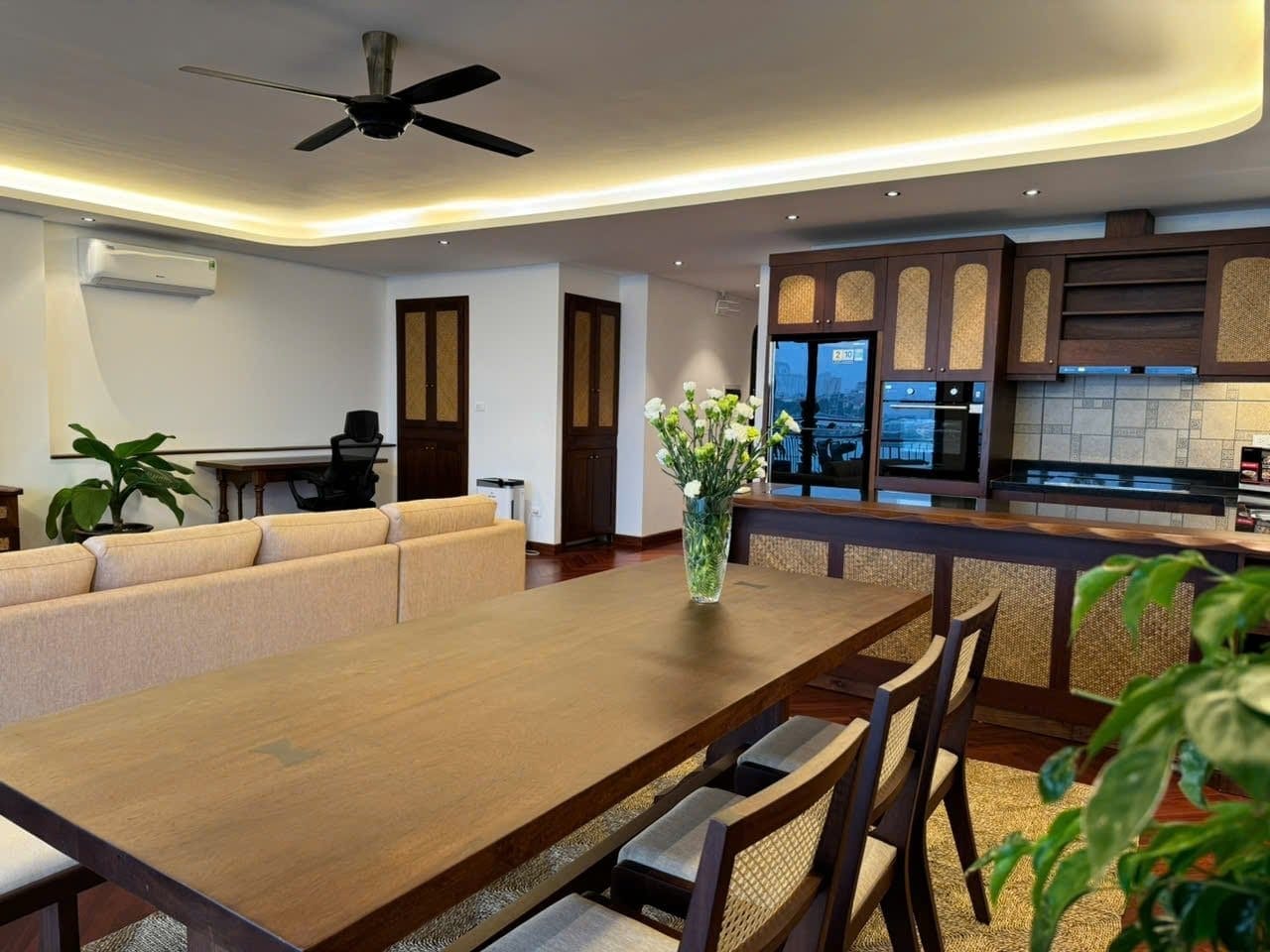
Furnishing matters too. "Fully furnished" can mean a complete, move-in-ready home or a bed, a sofa, and not much else. Confirm what stays, what is broken, and who fixes the air-conditioning when it fails in July. A clear, itemised breakdown of every recurring charge is the single best protection against the "but I thought rent included that" conversation three months in.
Deposits and agent fees: how it normally works
In Hanoi, two months of rent as a security deposit is the common starting point, though it is negotiable, especially on longer leases. Norms in Ho Chi Minh City and Da Nang can differ, and your concierge will confirm what is usual for the building you choose. The deposit should be returned at the end of the tenancy minus genuine damage beyond fair wear and tear. "Should" only protects you if the conditions are written into the contract and the property condition is documented when you move in.
On fees, the important thing to understand is who pays the agent. In many markets the landlord pays the agent commission, so a tenant should not be charged a separate finder fee on top. If someone asks you for a fee simply to be shown apartments, treat it as a red flag and ask what exactly it covers.
- Photograph and note the condition of everything before you sign
- Get the deposit-return conditions in writing
- Confirm who pays the agent. You should not be double-charged
- Negotiate; a longer lease usually buys you a lower deposit or rent
The contract, and why it has to be in a language you read
A lease you cannot read is a lease you cannot enforce. Insist on a bilingual contract, Vietnamese beside a language you read, that spells out the rent, the term, the notice period, what happens to the deposit, who is responsible for repairs, and whether the landlord can raise the rent mid-lease. Verbal promises made during a viewing carry no weight once you have moved in. If it is not in the document, it does not exist.
A proper registered lease also matters beyond the apartment itself. Your residential address feeds into other parts of settling in Vietnam, as it is part of how a temporary residence card and other registrations are processed, so getting a clean, documented tenancy right at the start saves you problems later.
How Nest handles the search
We start from verified listings rather than whatever is being passed around, so the homes you see are real, available, and priced at the genuine all-in cost. You can browse what is available yourself, or tell us your budget, preferred area, commute, and move-in date and we will shortlist places that actually fit, then arrange the viewings.
When you find the one, we review the contract with you in your language, make sure the deposit and fee terms are fair, and sit on your side of the table through the negotiation. The aim is simple: you sign something you understand, in a home you have seen, at a price you agreed. And you keep your deposit when you leave.
Common questions
Where do most expats rent in Hanoi, Ho Chi Minh City and Da Nang?
How much is the deposit for an apartment in Hanoi?
Do I have to pay an agent fee to rent an apartment in Vietnam?
How do I avoid rental scams in Hanoi, Ho Chi Minh City or Da Nang?
Should my rental contract in Vietnam be in English?
What should I check before signing an apartment lease?
Want Nest to handle apartment rental?
Tell us your situation and a Nest concierge will message you to book a free 20-minute call, no obligation.