Tây Hồ Hanoi: New Development Plans, and What It Honestly Means for Renters

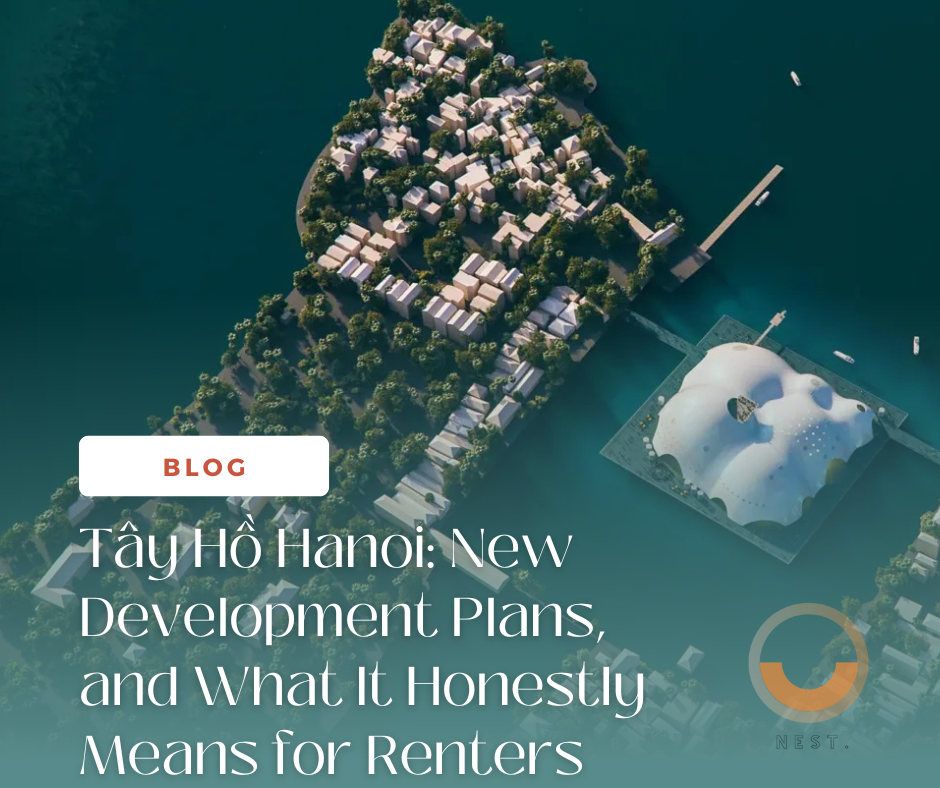
The Quảng An area in Tây Hồ District, Hanoi is set for one of the city’s most ambitious urban development projects in recent years — transforming parts of the Quảng An peninsula into a modern cultural, artistic, and recreational hub while preserving West Lake’s unique heritage and lakeside appeal.
At the heart of these plans is the Hanoi Opera House and Cultural & Art Park, a landmark project that aims to elevate the area’s cultural profile and attract both local and international visitors. https://vnexpress.net/khoi-cong-xay-dung-nha-hat-opera-ha-noi-ben-ho-tay-4947473.html?utm_source=chatgpt.com
What the Quảng An Development Includes
The detailed urban planning for the Quảng An peninsula covers roughly 44–45 hectares and is part of a broader strategy to enhance the West Lake area’s cultural, recreational, and residential value. It aims to:
Create a central cultural and artistic park with green spaces, themed attractions, and leisure areas.
- Build a modern, large-scale Opera House designed to be a new cultural landmark for Hanoi. h
- ttps://vir.com.vn/hanoi-approves-detailed-planning-for-quang-an-peninsula-119233.html&link=autochanger
- Link public landscape spaces and major visitor routes across the peninsula, lakefronts, and adjacent urban zones.
- Integrate commercial, hotel, service, and tourism development areas that meet current standards. https://vir.com.vn/hanoi-approves-detailed-planning-for-quang-an-peninsula-119233.html&link=autochanger
This vision is reflected in the attached planning map, which highlights a network of green pathways, public plazas, cultural spaces, and strategic connections to existing neighborhoods and roads.
The Hanoi Opera House: A New Cultural Icon
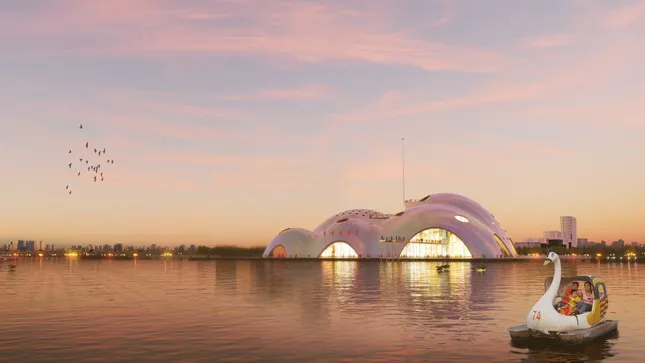

One of the centerpieces of the Quảng An plan is the Hanoi Opera House, being constructed on Đầm Trị Lake on the Quảng An peninsula. The project officially broke ground in October 2025 and is expected to be completed around 2027.
Key features include:
- A world-class opera and performance complex with nearly 2,000 seats.
- Multiple performance spaces, including a major opera hall and a flexible multi-purpose venue.
- Rehearsal facilities, a museum, viewing terraces, and public gathering areas.
- A distinct architectural design by world-renowned architect Renzo Piano, featuring a roof inspired by West Lake’s rippling surface, coated in reflective materials that change with light.
The location — right beside West Lake and within a short distance of central Tây Hồ neighborhoods — is expected to make the Opera House a cultural magnet and major destination for concerts, dance, opera, and large-scale events.
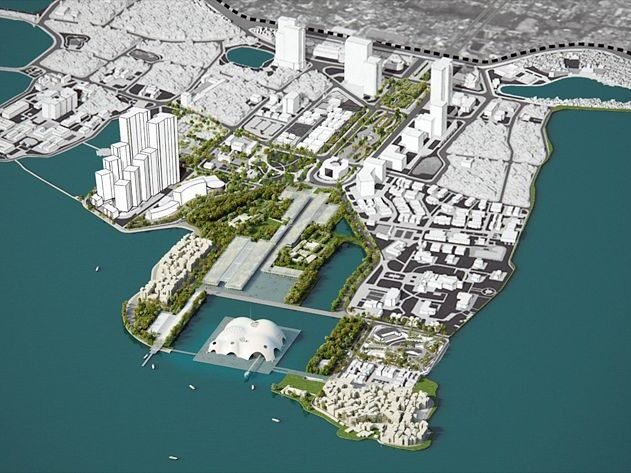
Understanding the Planning Map (Attached Image)
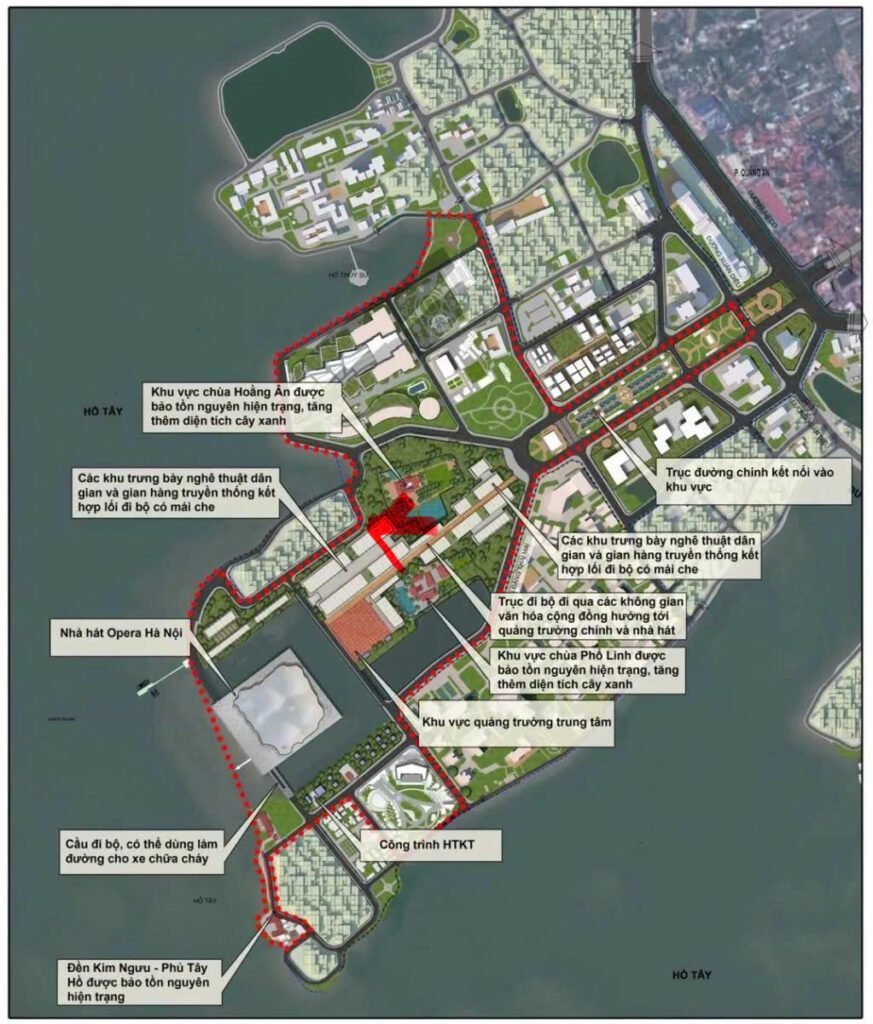
The attached image shows the proposed layout and land use for the Quảng An peninsula development:
- The dotted boundary indicates the planning area encompassing green spaces, cultural zones, and new public infrastructure.
- Labels in the image highlight key elements such as proposed art and traditional craft exhibition areas, walkways with covered paths, and the protected Hoàng Ân and Phổ Linh temple zones, which will be preserved and enhanced.
- A central plaza and cultural corridor connecting public spaces to the new Opera House is shown, along with pedestrian axes aiming to integrate lakeside landscapes with cultural attractions.
- Nearby road connections and exhibition/market areas are also part of the plan, blending public amenities with local heritage. (Note: the image labels illustrate planning intentions – not final construction details.)
This urban design reflects a blend of heritage preservation and modern cultural infrastructure, aimed at making Quảng An a more vibrant hub while respecting existing lakeside character.
Why This Matters to Renters
For those living or renting in Tây Hồ and its surrounding areas:
1. Property Values & Demand
The introduction of a major cultural landmark and enhanced public spaces will likely increase local demand for rentals and services, particularly in Quảng An, Xuân Diệu, Tô Ngọc Vân, and neighboring streets.
2. Streetscape and Amenities
New green corridors, plazas, and pedestrian pathways will make the area more walkable and attractive, benefiting nearby apartments and shops.
3. Events & Community Life
Once opened, the Opera House will host a wide range of performances, exhibitions, and festivals — adding to the cultural vibrancy and giving residents new leisure and entertainment options right at their doorstep.
4. Infrastructure Enhancements
The project includes improvements to traffic flow, green spaces, commercial services, and public facilities, which can make daily life more convenient for local tenants.
What Renters Should Be Aware Of During Construction
While the future of Quảng An Peninsula looks bright — with new cultural spaces, parks, and the Hanoi Opera House bringing long-term value — renters in the area should also understand the short-term realities that come with a project of this scale.
1. Construction Noise and Activity
Large-scale development means heavy machinery, drilling, and building works — often beginning early in the morning. Even buildings several streets away may experience background construction noise, especially during major groundwork or infrastructure upgrades.
2. Road Closures and Limited Access
Temporary roadblocks, rerouting, or restricted access to parts of Đặng Thai Mai, Tây Hồ, and Quảng An can occur as road and drainage systems are upgraded. This can make commuting or deliveries less convenient at times.
3. Dust and Air Quality
With multiple sites under construction, dust and reduced air quality can be noticeable, especially during dry months or windy days. Lake breezes help disperse it, but residents may still want to keep windows closed during heavy works.
4. Changing Views and Surroundings
Some apartments that currently overlook Đầm Trị or quiet green areas may experience temporary loss of view or added visual clutter due to cranes, scaffolding, or unfinished structures nearby.
5. Construction Lighting and Traffic
Nighttime lighting, construction vehicle movement, and increased worker traffic can slightly alter the peaceful residential atmosphere that Tây Hồ is known for — though this is temporary.
6. Rent Price Fluctuations
During the building phase, some landlords may offer temporary rent discounts to offset the inconvenience. However, once the Opera House and cultural district open, rental prices are expected to rise significantly due to the area’s increased desirability.
Quick Facts
- Project size: ~44–45 hectares planning area.
- Opera House investment: ~VND 12.7 trillion+ (over US$480 million).
- Architectural lead: Renzo Piano — internationally acclaimed architect.
- Expected completion: ~2027.
Bottom Line
The Quảng An & Tây Hồ development marks a major cultural transformation for West Lake’s lakeside districts, blending world-class cultural infrastructure with carefully planned public spaces and entertainment areas. For renters, this means not just a beautiful neighborhood but a place that’s rapidly becoming one of Hanoi’s most desirable cultural and lifestyle destinations.
If you’re considering renting in Tây Hồ or nearby, now is a great time to learn more about upcoming changes and how they may benefit your living experience.
NEST.’s Honest Advice
At NEST., we believe in being transparent: if there’s active construction near a property, we’ll let you know upfront.
While we can’t promise a completely quiet environment during Hanoi’s development boom, we can recommend streets and buildings less likely to be affected – such as areas behind Xuân Diệu, Quảng Khánh, or further north toward Phú Thượng.
Feel free to browse apartments in these areas on : https://nestliving.vn/properties/
Long-term, renters who stay in Tây Hồ during this period will be among the first to enjoy Hanoi’s new cultural heart once the Quảng An redevelopment is complete.