The Expat Guide to Hanoi Utility Bills: How to Avoid the “Hidden Fees” Trap


Moving to Hanoi is an incredible adventure. From the vibrant street food culture to the scenic cafe-lined streets of Tay Ho, it is a city that captures your heart quickly. But for many expats and digital nomads, that initial honeymoon phase ends abruptly when the first month’s utility bill arrives.
If you are currently hunting for an apartment in Hanoi, or if you suspect your current landlord is overcharging you, you are not alone. “Opaque utility billing” is one of the most common frustrations reported by foreigners renting in Vietnam.
Let’s break down exactly how utility billing works in Hanoi, how to spot an electricity markup scam, and what hidden costs you need to watch out for before signing a lease.
1. The Great Electricity Markup (VND per kWh)
In Hanoi, your electric bill (tiền điện) will easily be your largest secondary living expense, especially during the sweltering summer months from May to September when air conditioning is non-negotiable.
Unlike many Western countries that use a flat rate, Vietnam uses a progressive, tiered pricing system managed by EVN (Electricity Vietnam). The more power you consume, the higher the rate per kilowatt-hour (kWh) becomes.
The Real State Rates vs. The Expat Markup
Official EVN residential rates operate on a sliding scale. According to the Ministry of Industry and Trade regulations, standard household rates look like this:
| Consumption Tier | Official EVN Rate (approx. VND/kWh) |
| 0 – 50 kWh | ~1,984 VND |
| 51 – 100 kWh | ~2,050 VND |
| 101 – 200 kWh | ~2,380 VND |
| 201 – 300 kWh | ~2,998 VND |
| 301 – 400 kWh | ~3,350 VND |
| 401+ kWh | ~3,460 VND |
The Serviced Apartment Reality: Commercial vs. Residential Rates
If you rent a standalone condo from a private owner (in residential complexes like Vinhomes or Mipec), you pay these official tiers directly via an app or a bank transfer.
However, if you move into a dedicated serviced apartment block or a studio mini-hotel, your landlord will almost always charge a flat rate of 4,000 VND to 4,500 VND per kWh. While this feels like an unfair markup, there is a distinct legal reason behind it:
The Business Tariff Trap: Dedicated serviced apartment buildings operate as licensed commercial enterprises rather than standard residential housing. Because of this business status, EVN charges the building on a Commercial Electricity Tariff rather than a residential one.
Under the commercial tariff, rates fluctuate based on peak and off-peak hours instead of total monthly consumption. During peak hours (hot afternoons), low-voltage commercial power rates spike significantly higher than standard residential tiers – frequently passing 5,400 VND/kWh.
To hedge against these massive peak-hour spikes and cover shared building costs (like elevator power, hallway AC, and water pumps), operators apply a baseline flat rate of 4,500 VND across all units.
When Does it Become a Scam?
While a flat rate in a commercial serviced block is standard business practice, it becomes a hidden profit driver in shared houses or regular residential tube houses. If a landlord renting out standard residential rooms charges you a flat 4,500 VND/kWh, they are likely pocketing the difference between your flat cash payment and their lower, tiered EVN residential bill.
2. The Shared Building & Management Fee Surprise
When apartment hunting on Facebook groups, you will see incredibly attractive base rent prices. But if a deal looks too good to be true, it’s time to ask about the Building Management Fee (phí quản lý).
In modern high-rise complexes, this fee covers building maintenance, trash collection, and security.
- The Catch: Some landlords omit this fee from the advertised price. You might sign a lease for a 12,000,000 VND apartment, only to find an extra 1,500,000 VND management fee slapped onto your invoice every month.
- Amenities Fees: Always ask if pool, gym, and rooftop access are bundled into your rent. In many luxury complexes, these are treated as separate memberships.
3. Water and Internet: Flat Rates vs. Actual Usage
Water (tiền nước) and Wi-Fi are lower expenses, but they can still hide unexpected price gouging.
The Shared Wi-Fi Bottleneck: Many landlords offer “Free High-Speed Wi-Fi.” In reality, this often means the entire 5-story building is sharing a single residential router. If you work from home or take Zoom calls, you will likely end up paying an extra 300,000 VND per month out of pocket to install your own dedicated VNPT or Viettel line.
Water Overcharging: The municipal water rate in Hanoi is relatively cheap. Yet, many serviced apartment landlords charge a flat fee of 100,000 to 200,000 VND per person, per month. If you live alone and take normal showers, you are paying significantly more than your actual footprint.
How to Protect Your Wallet: A Pre-Lease Checklist
Before handing over a 1-month deposit and 3 months of upfront rent, walk through this quick checklist with your real estate broker or landlord:
1.Determine the Building’s Legal Status:Identify the building type.
Ask if the building is registered as a commercial serviced apartment business or a standard private residence. This explains why they are using a flat rate instead of standard EVN tiers.
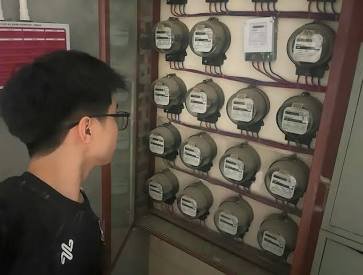
2.Take a Photo of the Meters:On move-in day.
Locate your physical electricity and water meters on the day you receive the keys. Take a timestamped photograph to ensure your starting balance is accurately logged in the contract.
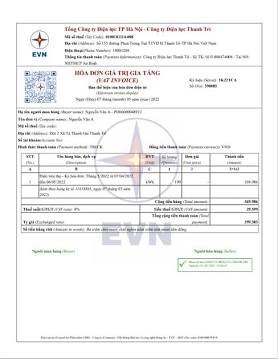
3.Demand an Itemized Bill Template:Prevent lump-sum invoices.
Insist that your monthly invoice clearly shows the math: (Current Meter Reading - Previous Meter Reading) x Rate. Refuse to pay vague, handwritten “lump sum” bills.
4.Write Fees into the Bilingual Contract:Legally binding protection.
Ensure management fees, internet costs, and parking fees (usually 100,000 to 200,000 VND for a motorbike) are explicitly listed as either “Included” or itemized with fixed numbers in the English-Vietnamese lease agreement.
The Golden Rule: If a landlord is hesitant to put exact utility rates in writing within the lease agreement, view it as a major red flag and look elsewhere. There are plenty of transparent, honest landlords in Hanoi who will treat you fairly.